
Managing a suspected Spinal Injury.
Creating further damage when dealing with a suspected spinal injury is always a great concern for first aiders.
The vertebrae is in 5 sections and contains 28 bones (some of these are fused to create a “joined bone”) and of course supports and protects the spinal cord which is carrying signals from the brain to different parts of the body.
If the injured person is conscious and can give symptoms of the pain eg: tingling in the hands, feet, or worse no sense of felling at all leave them on their back or in the position you have found them, avoid any movement of their vertebrae assisting with immobilisation if possible. If you are trained to do so and the equipment is available apply a neck brace or collar for support, constantly monitor their A.B.C and treat for shock while you are waiting for the professionals.
If the injured person is unconscious we should still be concerned about the movement of the vertebrae and must manage the causality with as much care as possible but in this case the causality must be rolled onto their side into the lateral position ensuring spinal alignment as this is don
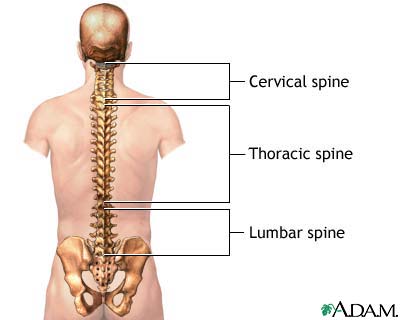
The reason the unconscious causality must be moved is that there is a greater risk of blocking of the airway by their tongue or aspirating (choking on their vomit) when left on their back which will result in suffocation of the causality. The A.R.C (Australian Resuscitation Council) states that “airway management must take precedence over ever other condition including spinal damage”.
Managing a Thermal Burn
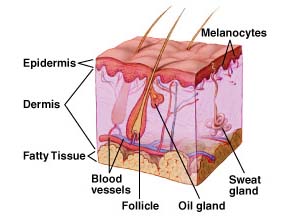
When the skin has been opened through cutting or burns the body is at a high risk of infection. When managing any injury it is important to ensure that part of the management includes infection control. If possible always use clean, hygienic, equipment including bandaging. An ideal method of infection control for a burn is using a plastic wrap like “Cling Film” from the kitchen. Make sure it is not applied to tight as you should expect some swelling from fluid retention from the burn. Burns should be ran under cool running water for at least 20 minutes or until the professionals arrive to give assistance.
Managing a Fracture
A fracture may not always be obvious. If a casualty is showing signs and symptoms including pain, swelling, loss of movement of a limb, deformity you should suspect a fracture and manage by immobilising.
Immablisation can be done with very simple tools. A fracture to a forearm can be managed by just resting it on a pillow on top of a table while waiting for the ambulance or supported by lifting their shirt up and pinning it above the forearm.
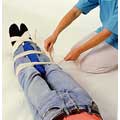
If possible part of immobilising the fracture may include “splinting”. Splints can be made by using simple household items like a rolled up newspaper or magazine, rolled towel or even another body part.
When splinting it is important to ensure that the splint is longer enough to go past the joint of the limb it is also important to keep checking the finger tips or toes for signs of restricted circulation.
If you are not sure about a word check the GLOSSARY for help!!
A
The area below the chest, extending to and including the pelvis, which contains the organs of digestion.
Abrasion
A wound caused by scraping or rubbing.
Absorb
To take in fluids or gases through the skin.
Acute Myocardial Infarction
A myocardial infarction — or acute myocardial infarction — is a complete blockage of the coronary artery, which carries blood to the myocardium (heart muscle wall). The blockage often is a result of a blood clot, but can also be caused by plaque (cholesterol) or other material. A myocardial infarction leads to heart muscle death and may cause decreased heart output. Victims of acute myocardial infarction are at risk for sudden cardiac arrest and death.
Adrenaline
A naturally occurring chemical which stimulates the body’s functions.
Advanced Life Support
A level of care provided by prehospital emergency medical services. Advanced life support consists of invasive life-saving procedures including the placement of advanced airway adjuncts, intravenous infusions, manual defibrillation, electrocardiogram interpretation, and much more.
Adverse Effect/Reaction
An adverse effect is an unwanted or harmful result of using a treatment. Most adverse effects have little or no medical benefits.
AED
Automated external defibrillation.
AIDS
Acquired Immunodeficiency Syndrome.
Airway
The passageway for air to travel from the mouth and nose to the lungs.
Airway obstruction
Partial or complete blockage of the airway, which either prevents or makes it difficult for air to reach a person’s lungs.
Allergic
Having an adverse reaction to a substance that does not normally cause an adverse reaction.
Alveoli
Air sacs in the lungs where gas exchange takes place.
Ambulance
A vehicle used to transport sick or injured people with medical needs. A prehospital emergency medical services provider tends to the sick or injured occupant during transportation. Ambulances can be cars, trucks, helicopters, boats, or airplanes.
Amputation
The removal of a body part e.g. finger, toe, arm, leg.
Amphetamine
Chemical powder which reacts as a stimulant to the CNS.
Anaphylactic Shock
Anaphylaxis resulting in a collapse of the circulatory system and a dangerous decrease in blood pressure. Anaphylactic shock is a life-threatening reaction that requires immediate treatment.
Anaphylaxis
Severe, often life threatening, generalised allergic reaction. Unlike a typical allergic reaction, anaphylaxis affects more than one body system.
Anatomy
Form and structure of living organisms.
Anterior
Front of the body.
Angina (Angina pectoris)
Transient chest pain caused by poor blood supply to the heart muscle resulting in chest pain which increases with activity or stress.
Artery (ies)
Blood vessels that carry oxygen-rich blood from the heart to all parts of the body.
Arterioles
Small arteries.
Aseptic technique
Protection against infection by using a sterile approach to wound care.
Aspiration
Vomitus in the lungs.
Assessment
To identify a casualty’s condition (injuries or illness) by observation, examination and questioning.
Asthma
A medical condition that causes narrowing of the small airways in the lungs. Typically, asthma patients develop wheezing and have increased mucous production in their lungs. Asthma patients can have episodes of increased shortness of breath, often triggered by allergic reactions. Asthma sufferers often have the disease for many years, and the episodes of shortness of breath can be life-threatening.
Asystole
The absolute standstill of the heart muscle. The lack of electrical activity in the heart muscle shows on an electrocardiogram (ECG) as a flat line. The lack of heart contractions is one cause of cardiac arrest.
Avulsion
Soft tissue injury where a flap of tissue has been removed or is barely attached. Avulsion also may refer to an injury of the bone where a tendon or ligament has been ripped away from its insertion point.
Autonomic (nerves)
Nerves which function without conscious effort.
B
Basic Life Support
A level of medical care provided by prehospital emergency medical services. Basic life support consists of essential non-invasive life-saving procedures, such as CPR, bleeding control, splinting broken bones, artificial ventilation, and basic airway management.
Battle’s sign
A bruise-like contusion behind the ear or on the neck associated with head injury.
Bladder
An organ acting as a reservoir e.g. urinary bladder (for urine), gall bladder (for bile).
Blood
The fluid that circulates through the heart, arteries, capillaries and veins and that constitutes the chief means of transport within the body.
Blood pressure
The force exerted by the blood against the walls of blood vessels, the force required to circulate the blood around the body.
Bowel
The part of the digestive system which collects, stores and expels waste from the body.
Brachial pulse
The pulse that can be felt in a baby on the upper arm; between the biceps and triceps muscle.
Brain
The centre of the nervous system that controls all body functions.
Brain attack (stroke)
Damage to the brain tissue caused by a blocked vessel or bleeding.
Breastbone – see Sternum
Breathing
The spontaneous movement of air in and out of the lungs.
Bronchi
Large air passages that divide from the windpipe into the left and right lungs.
Bronchioles
Small air passages that divide from the bronchi and lead to the alveoli.
Bruise
A closed wound caused by a blow from a blunt object.
Bystander
Someone at the scene of an emergency (other than the casualty).
C
Capillaries
The smallest of blood vessels through which oxygen and nutrients pass to the cells.
Capillary return
The change of colour seen when a fingernail is squeezed, indicating the amount of blood circulation present.
Carbon dioxide
In the air breathed out during respiration.
Cardiac
Pertaining to the heart.
Cardiac arrest
Condition in which the heart has stopped or is too weak to pump effectively. A casualty suffering a cardiac arrest will be unconscious, unresponsive to verbal commands and touch, not breathing normally and not moving. Infrequent gasps of air may be seen in a witnessed cardiac arrest. However, this is not an indication of effective breathing. The three most common conditions that lead to cardiac arrest are ventricular fibrillation, ventricular tachycardia and Asystole. Casualties of cardiac arrest do not have enough circulation to maintain blood flow to the brain. Irreversible brain damage and death will usually occur within four minutes of the onset of cardiac arrest. Cardiopulmonary resuscitation (CPR) and defibrillation are the only treatments for cardiac arrest.
Cardiopulmonary resuscitation (CPR)
The technique combining rescue breathing and external chest compressions for a cardiac arrest casualty who is unconscious, unresponsive, not breathing normally and not moving. CPR is aimed at maintaining sufficient circulation of blood through the body to preserve brain function until an ambulance arrives.
Cardiovascular
The body’s system involving the heart and blood vessels.
Cardiovascular disease
Disease of the heart and blood vessels; commonly known as heart disease.
A person experiencing illness or injury and in need of medical assistance or first aid.
The pulse that can be felt over a carotid artery in the neck.
Cartilage
Part of the supporting tissues found in joints and between the vertebrae.
Cell
The cell is the smallest unit of life. The human body is made of trillions of cells and each has a single function. For example: A muscle cell only contracts and a nerve cell only transports an impulse. Cells are usually clumped together with other cells that do the same function. Collections of the same cells are called tissues. Only a few cells are left to float around disconnected from their neighbours: blood cells, eggs and sperm.
Cervical
Relating to the first seven vertebra of the spine.
Cervical collar
A form of neck brace used to support the spine after a head or neck injury.
Chain of Survival
A four-stage international approach to the emergency care of the casualty of cardiac arrest that gives the best possible chance of survival.
Chest
The upper part of the body (torso), containing the heart, major blood vessels and lungs.
Chest compressions
An action of rhythmic pressure and relaxation on the casualty’s chest to pump their heart, which maintains circulation. Chest compressions are often used in conjunction with rescue breathing.
Choking
The blocking of an airway due to a foreign object lodged in the throat or windpipe.
Circulation
The flow of blood around the body.
Closed Fracture
A fractured bone that does not produce an open wound in the skin.
Closed head injury results in swelling or bleeding within the skull, which can lead to brain damage or death.
Central nervous system; the brain and spinal cord.
A cold dressing that assists control of bruising and swelling and helps relieve pain.
A condition that causes the lining of the lung to pull away from the wall of the chest. The space between the lung and the chest fills with air, pushing the injured lung against the heart and the other lung. Collapsed lung can occur as a result of chest injury, or spontaneously in patients with lung disease.
A disease that may be transferred from one person or animal to another.
Complicated fracture
A fracture accompanied by injury to neighbouring soft tissues, such as nerves and blood vessels.
The term concussion describes an injury to the brain resulting from an impact to the head. By definition, a concussion is not a life-threatening injury, but it can cause both short-term and long-term problems. A concussion results from a closed-head type of injury and does not include injuries in which there is bleeding under the skull or into the brain.
Heart attack due to a blockage of the coronary arteries.
The portion of the skull containing the brain, excluding the face and jaw.
‘Grating’ or other sound made by fractured bone rubbing together.
CSF
Cerebro-spinal fluid.
CVA
Cerebral vascular accident.
Cyanosis
Cyanosis refers to the blue coloration that occurs when the bloodstream is low on oxygen. Cyanosis is usually seen in areas of the body where blood flows close to the surface — the lips and fingernails are the most common.
D
A condition of strength loss, weakness.
Defibrillation
Delivery of a precise electric shock to the heart by an automated external defibrillator in an attempt to restore normal heart rhythm.
Defibrillator
A device used to monitor heart rhythm and administer an electric shock to cardiac arrest casualties in an attempt to restore normal heart rhythm.
Dehydration
The loss of fluid or moisture.
Diabetes
Disease caused by the inadequate production of insulin in the pancreas.
Diaphoresis
Profuse sweating caused by the body’s response to stress. Diaphoresis can come from pain, lack of oxygen or sugar in the bloodstream, or from fear.
Diaphragm
A large muscle dividing the chest from the abdomen, which assists in breathing.
Dilated
Large, expanded.
Direct Pressure
Pressure applied to a wound in order to stop bleeding.
Dislocation
Where a joint has been pulled apart or displaced.
Disorientation
To be confused in direction and having an inability to function normally.
Distal
Remote, furthest from point of reference.
E
Elastic bandages are stretchy wraps that provide gentle compression to minor injuries. Elastic bandages should only be used during the first two days following an injury along with rest, ice and elevation.
Embolism
Blocking of an artery by a clot or bubble of gas.
Emergency
A situation requiring immediate action from a bystander.
Emergency Medical Services (EMS)
Any part of a system designed to respond to medical emergencies and provide prehospital or in-hospital treatment. Often refers to ambulances and first responders, though emergency medical services (EMS) include all services necessary to help ill or injured people return to the state of health they enjoyed before their emergencies.
Emergency Medical Technicians (EMT)
A certified healthcare provider who is trained to treat and transport casualties of emergencies. Emergency medical technicians (EMT) provide basic life support to casualties. Emergency medical technicians may work in the emergency department, fire department, public gatherings and factories, but most importantly the certification is aimed at providing care in an ambulance.
Endocrine
The body’s system which involves chemical-secreting glands.
EpiPen
A device for self-administering adrenaline in anaphylaxis.
Epistaxis
Nosebleed.
Epiglottis
Flap of cartilage situated above the glottis (opening of the larynx). When swallowing, the epiglottis closes over the larynx to prevent food and fluids from entering the trachea.
Epilepsy
A group of neurological disorders in which there is an electrical disturbance in the brain, often causing a seizure.
Exhale
The process of breathing out.
Extremities
The fingers, toes, nose or ear lobes.
F
Waste discharged from the bowel.
Fainting
Momentary loss of consciousness caused by insufficient blood supply to the brain.
Febrile
Fever, feverish.
Fever
Body temperature above the normal range of 36.5 – 37.1 Celsius.
Fibrillation
Irregular twitching of individual muscle cells (fibres) or small groups of muscle fibres preventing effective action by an organ or muscle (such as the heart).
Fight or Flight Response
The fight or flight response is a catch-all phrase describing the body’s response to stress. Fight or flight refers to the two choices our ancestors had when facing a dangerous animal or enemy. In that moment of stress (fear) the body prepares itself to be injured and to expend energy in the large muscle groups of the arms, legs and shoulders that we use to either fight or run (flight).
Finger sweep
A technique used to remove foreign material from a casualty’s mouth.
First Aid
Immediate care given to a casualty suffering an injury or sudden illness until more advanced care can be provided.
First Responder
Often, first responder is used as a general term for all emergency service personnel who are expected to respond to medical emergencies or large-scale disasters. A public safety official — such as a police or fire officer — certified to provide basic life support skills.
Flail Chest
Refers to a section of the rib cage that has broken away from the surrounding ribs. Usually, more than one rib is involved, and they are broken in at least two places. Flail chest typically is the result of blunt chest trauma and is more common in the elderly. These segments of broken ribs got the name flail chest because the segments flail back and forth opposite from the rest of the chest wall. In other words, as the rest of the chest expands to suck in a breath of air, the flail chest segment sucks in. During exhalation, when the rest of the chest contracts, the flail chest segment bulges out. Often, a grinding sound or feeling called crepitus goes with the flailing segment.
Flammable
Easily set on fire.
Foetal (position)
In a lateral position with knees drawn up to the body and arms folded.
Foetus
Unborn baby.
Fracture
A fracture is any broken bone, whether it’s just a crack or shattered into a hundred pieces.
G
An organ in the upper abdomen that stores bile.
Genitals
The external organs of reproduction.
Gland
Any organ or group of cells that secrete specific substances.
Grand mal
Epileptic seizure involving uncontrolled spasms of the muscles.GuardingAct of a casualty putting hands over the injury site.
H
Bleeding.
Heart
A fist-sized muscular organ that pumps blood throughout the body.
Heart attack
Damage which occurs to the heart muscle when blood supply in the coronary arteries is blocked and heart tissue does not receive enough oxygen-rich blood; also called myocardial infarction.
Heat stroke
A condition caused by overheating of the body to a level that endangers life.
History
Information of the incident gathered to identify how the injury or illness occurred.
Hot pack
A pad used for warming parts of the body in order to manage pain and loosen muscles.
Hyperglycaemia
Higher than normal levels of sugar in the blood.
Hyperthermia
Higher than normal body temperature.
Hypoglycaemia
Lower than normal levels of sugar in the blood.
Hypothermia
Lower than normal body temperature.
I
To stop movement.
Incision
A wound caused by a sharp edge.
Incontinence
Inability to control passing of urine or faeces.
Infarction
Death of muscle tissue.
Infection
Illness caused by the invasion into the body of pathogenic micro-organisms.
Inflammation
Swelling and redness of tissues as they react to infection, irritation or injury.
A hormone released by the pancreas to assist cells to utilise sugar.
Intercostals (muscles)
Between the ribs.
Intestine
Portion of the digestive system extending from the stomach to the anus.
Irrigate
To flush with a continual flow of fluid; usually water or saline.
Ischaemia
Damage caused by deficiency of blood to the tissues.
J
Method used to open a casualty’s airway.
L
The structure in the throat that contains the vocal cords, at the top of the trachea.
Lateral
On the side.
Lesion
Cut or separation of the skin, organs, or spinal cod. Also a sore or ulcer.
Ligament
Tissues connecting bones, especially at joints.
Liver
An organ in the upper right hand side of the abdomen which assists in digestion and maintains normal blood sugar levels.
Local Reaction
An inflammation of body tissues that usually affects only one organ or organ system.
Log roll
The method of turning a casualty into the side position without bending the body – the movement requires at least three rescuers to complete the move.
Lungs
Two organs in the chest where oxygen is absorbed into the blood and carbon dioxide is removed from the body during breathing.
Lymph
Fluid which drains from the tissues.
M
Refers to the way damage to skin, muscles, organs and bones happen. Healthcare providers use mechanism of injury to help determine how likely it is that a serious injury has occurred.
Medical Condition
A condition is a medical problem that needs to be treated or managed. Many medical conditions indicate more complicated diseases or illnesses.
Meninges
Protective membranes surrounding the brain and spinal cord. There are three layers: dura mater, arachnoid and pia mater. These membranes provide a cushion from injury and bathe the brain and spinal cord with cerebrospinal fluid (CSF). An infection of the meninges is known as meningitis and can be life-threatening.
Metabolism
Physical and chemical processes which maintain life.
Mucous membrane
The tissue that lines the respiratory and alimentary tracts.
Mucus
A slippery and sticky secretion from mucous membranes that lubricates and protects some parts of the body.
Muscles
Tissues which perform movement by contracting and relaxing.
Musculoskeletal
The body’s system involving the muscles and bones.
N
A tube inserted through a nostril, across the floor of the nose, and through the nasopharynx so that the tongue does not block air flow in an unconscious person.
Nausea
A feeling of the need to vomit.
Necrosis
Necrosis is body tissue death caused by trauma or a medical condition.
Nerves
Bundles of fibres interconnecting the nervous system with the organs and other parts of the body.
Normal breathing
The rate, depth and quality of breathing a person should achieve relating to their age, health and normal activity.
O
Blockage.
Oesophagus
The part of the digestive tract, that extends from the pharynx to the stomach and carries food and fluids for digestion.
Open Fracture
The term used when the broken bone penetrates the skin. There will be an open, bleeding wound (which has a high risk of infection and requires immediate treatment).
Organ
A relatively independent part of the body that carries out one or more special functions.
Organ System
A group of organs that work together to perform a complex function.
Oropharyngeal Airway
A tube inserted through the mouth and pharynx so that the tongue does not block air flow in an unconscious person.
Over the Counter
Medications available for purchase without a prescription.
Oxygen
A colourless, odourless, tasteless gas essential to life, comprising approximately 21% of the air inhaled into the lungs during respiration.
P
To examine by touch.
Pancreas
A gland in the upper portion of the abdomen that produces insulin and other digestive juices.
Paradoxical (movement)
Opposite normal movement.
Paramedic
Paramedics provide advanced life support to casualties in an emergency situation.
Pelvis
The bones that support and protect the pelvic organs.
Peripheral
Situated away from the centre.
Petit mal
Epileptic seizures usually manifesting as attention lapse.
Pharynx
The muscular tube at the back of the mouth and nose which joins the oesophagus. Air passes here on the way to the larynx and food passes here on the way to the oesophagus.
Physiology
Study of the function of the body.
Pistol grip
A position of the hand on the casualty’s jaw that lifts and supports the jaw while the head is tilted backwards during CPR.
Placenta
Afterbirth, an organ which provides nutrients from the mother to foetus.
Plasma
The fluid medium of the blood.
Pneumothorax
The abnormal presence of air between the lung and the wall of the chest (pleural cavity), resulting in collapse of the lung.
Posterior
Back of the body.
Prehospital
The type of medical care provided at the scene of an emergency prior to the arrival at hospital.
Prescription
Prescription medications are not available without authorisation from a doctor.
Pressure Immobilisation (Bandaging) Technique (P.I.T.)
The application of a pressure bandage to delay entry of venom into the general circulation.
Psychosis
Mental illness when casualty loses touch with reality.
Pulmonary
Referring to the lungs.
Pulse
Expansion and contraction of an artery felt through the skin as the heart pumps blood.
Pupil
The small black opening in the centre of the coloured part of the eye.
R
Swollen eyes associated with head injury.
Recovery position
The safe and stable position for a breathing but unconscious victim.
Regurgitation
The silent and passive emptying of the stomach in an unconscious casualty into the oesophagus and mouth, has serious risks to the airway unless the casualty is on their side.
Reliever
Inhaler, puffer – Airomier, Asmol, Bricanyl, Epaq or Ventolin.
Rescue Breathing
Blowing air from one person into the mouth or nose of another to inflate the recipient’s lungs. Rescue breathing is often used as a compliment to chest compressions during cardiopulmonary resuscitation (CPR).
Respiration
Movement of air in and out of the lungs by inhaling and exhaling; during breathing.
Respiratory Arrest
The absence or cessation of breathing. In most cases, casualties of respiratory arrest are also suffering from cardiac arrest, and should receive CPR. Respiratory arrest also can be caused by drug overdose, severe asthma, choking, and more. Respiratory arrest casualties can sometimes have slow, gasping breaths known as agonal (painful) respirations. These breaths do not provide enough oxygen to support life.
Response
The act of responding; reply or reaction, required to identify if a casualty is conscious.
Resuscitation
Any effort to artificially restore or provide normal heart and/or lung function.
Rescue breathing
The technique of ventilating the lungs of a non-breathing casualty (also called mouth-to-mouth resuscitation).
Resuscitation
The preservation or restoration of life by the establishment and/or maintenance of airway, breathing and circulation.
S
Skills that licensed healthcare providers are trained to do. Scope of practice is defined by the government that issues the license, usually a state. Every healthcare provider has a scope of practice, except physicians. Physicians have the ability to develop new skills as necessary. For example it is in the paramedic scope of practice to give injections through muscle, under skin or directly into a vein. Paramedics are not usually licensed to suture wounds.
Seizure (convulsion, fit)
Uncontrolled and unconscious muscle spasms.
Shock
Life-threatening condition (usually) due to collapse of the circulatory system. In first aid, the term “shock” has three distinct definitions.
A medical condition consisting of too little blood flow to the brain and other vital organs. Shock has many causes and in the later stages will usually result in a decreasing blood pressure. Shock is a severe condition that can be fatal.
An emotional state of mind, usually following a traumatic event such as a car accident or the loss of a loved one. This is probably the most common usage of the term.
To deliver an electrical charge. In certain types of cardiac arrest, shocking the casualty can allow the heart to restart and beat normally.
Side Effect
The unintended effects of treatment other than the desired effect. Every treatment (medication, splinting, bandaging, surgery, etc.) affects the body. Most treatments have more than one effect. The effect you’re looking for is the desired effect. Anything else the treatment does is a side effect. Some side effects have medical benefits and are often alternative uses for the treatment.
SIDS
Sudden Infant Death Syndrome.
Sign
The obvious indications of a casualty’s injuries or illness e.g. skin colour, bruising, swelling, bleeding.
Signs of Life
There are four Signs of Life that a first aider should check to determine the conscious state of a casualty; unconscious, unresponsive, not moving, not breathing normally.
Situ
In place.
Skeleton
The bony structure of the body that protects and supports the soft organs and tissues.
Skull
The bones of the head that surround and protect the brain.
Spasm
Abnormal, sudden and continuous muscle contraction.
Spinal cord
The nervous tissue contained within the spinal bones (vertebra) which carries messages to and from the brain.
Spleen
The organ in the left upper abdomen that stores blood and destroys old blood cells.
Splint
Device used to immobilise a fractured limb until it can be assessed by a physician.
Sprain
An injury caused by over-stretching of the ligaments at a joint.
Sputum
Mucus which is expelled from the mouth.
Sterile
Containing no living micro-organisms.
Sternum (breastbone)
The bone (and cartilage) extending down the centre of the chest to which the ribs are attached.
Stimuli
Something that rouses to activity of feeling e.g. pain, sound.
Stoma
A surgically created opening, often in the windpipe or intestines.
Stridor
Shrill, harsh sound associated with airway obstruction.
Stroke (brain attack)
Damage to the brain tissue caused by a blocked vessel or bleeding.
Suffocation
To die from lack of air.
Supine
Lying on back with face upward.
Symptom
Are what the casualty tells the first aider i.e. nausea, pain, blurred vision. Only the casualty can feel a symptom; it can’t be seen, heard or felt by someone else.
Syndrome
Group of symptoms commonly occurring to make up a distinct illness or condition.
Systemic Reaction
When an inflammation spreads from a limited area of one organ (like the skin) to other organ systems in the body.
T
A fibrous band of tissue that attaches muscle to bone.
TIA
Transient Ischaemic Attack, a minor brain attack (stroke) with temporary signs and symptoms.
Tissues
A group of similar cells connected to each other that perform a special function e.g. the lining of the mouth.
Torso
That part of the body containing the chest, abdomen and pelvis.
Toxin (ic)
To be poisonous.
Trachea
The tube extending from the voice box to its division into the main bronchi, also known as the windpipe, conducts air to the lungs.
Traction
Gentle pulling on a fractured limb to align and relieve pressure.
Transient
Temporary, not permanent.
Trauma
A physical or psychological injury, usually due to external force.
Triage
The process of assessing multiple casualties to determine the priorities of care.
U
State of being insensible or without conscious experiences. A condition in which the casualty fails to respond to the spoken word or a touch.
Urine
A waste fluid filtered from the blood by the kidneys.
V
A vessel that carries blood toward the heart.
Venom (ous)
Poison derived from animals, fish or insects.
Ventricular Fibrillation
Ventricular fibrillation occurs when the heart muscle begins to quiver erratically, leading to a loss of blood flow through the heart (cardiac arrest). The treatment for ventricular fibrillation includes defibrillation and cardiopulmonary resuscitation (CPR).
Ventricular Tachycardia
Ventricular tachycardia is a recurring loop in the conduction pathways of the heart leading to rapid contractions of the ventricles. This causes the loss of blood flow from the inability of the ventricles to adequately fill with blood between contractions. The worst cases of ventricular tachycardia lead to cardiac arrest.
Vertebra (pl. Vertebrae)
The bones that comprise the spinal column.
Vital organs
Organs whose functions are essential to life, including the brain, heart and lungs.
Vomiting
The forceful ejection of stomach contents through the mouth in a conscious person.
Vomitus
Vomit, result of ejection of stomach contents.
W
Wheezing is the whistling sound of air moving through inflamed airways in the lungs. Most of the time, wheezing is only heard with a stethoscope placed on the chest. In severe cases, wheezing can be heard without a stethoscope.
Windpipe
The air passage between the larynx (voice box) and the main bronchi in the lungs.
Wound
An injury that involves a break in the skin.
X
The bony prominence at the lower end of the sternum.